Enterprise AI Security: How to Protect Confidential Data While Embracing AI
As enterprises actively adopt AI technologies to sharpen their competitive edge, the data security risks that AI introduces cannot be overlooked. From employees feeding confidential data into public AI services to large language models potentially leaking sensitive information from training datasets, AI security has become an issue every organization must take seriously. This article provides a comprehensive examination of the cybersecurity challenges enterprises face in the AI era, risk assessment frameworks, protective strategies, and how to build a secure and trustworthy enterprise AI environment.
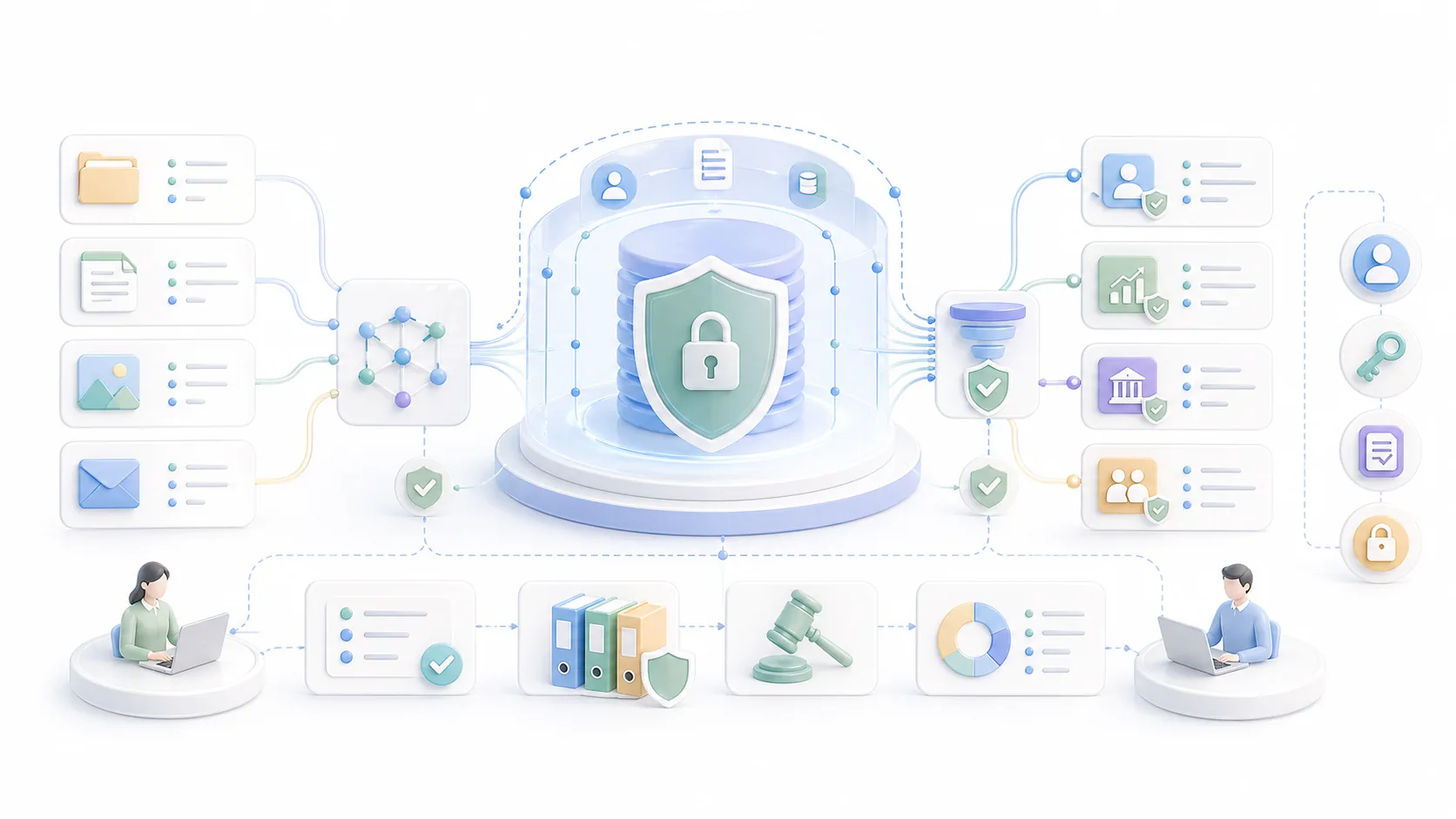
Key Security Risks in Enterprise AI Applications
Cybersecurity risks when utilizing AI services span several dimensions. First is data leakage risk: using third-party cloud AI services (such as ChatGPT or cloud APIs) transmits inputs to external servers. If employees inadvertently input sensitive information like customer personal data, trade secrets, financial records, or proprietary code, data leakage occurs. AI providers' policies on whether user inputs are used for model training differ across plan tiers (free / individual paid / enterprise), geographic regions, and contract terms, and may change over releases. Do not rely on industry generalities; inspect current official data policies for each specific service, explicitly contract terms barring training and specifying data retention and deletion obligations, and reinforce with administrative controls (blocking unapproved AI sites, gateway-level DLP filtering) rather than trusting vendor claims alone.
The second category is "model security risk": large language models themselves can become targets of attack. Prompt Injection refers to attackers using carefully crafted inputs to trick an AI model into bypassing its safety constraints, performing unintended actions, or leaking sensitive information contained in system prompts. Model Extraction involves issuing a large volume of queries to replicate a model's behavior. Adversarial Attacks exploit subtle input modifications to deceive an AI model into making incorrect judgments.
The third category is "supply chain risk": the AI models, frameworks, and libraries that enterprises rely on may contain known or unknown security vulnerabilities. Open-source models, while generally more transparent, may also be compromised with backdoors. An attack on any link in the AI supply chain can have downstream effects on every enterprise that depends on those services.
Fourth is 'compliance risk': as AI-related regulations continue to develop across countries (such as the EU AI Act and Taiwan's Personal Data Protection Act), enterprises need to review whether their use of AI meets the applicable legal requirements. Processing personal data with AI without properly implementing notice, purpose limitation, necessity, and security-safeguard requirements may give rise to administrative liability and civil damages; the specific applicable conditions and possible consequences need to be determined by legal counsel based on the data type, the enterprise's role, and the current statutory provisions for each case. In addition, the lack of transparency in an AI system's decision-making process (the black-box problem) can easily trigger disputes in scenarios that require an explanation of reasoning (such as credit underwriting or HR screening); this type of use is classified as high-risk with additional obligations in some jurisdictions. The actual scope of application and operational requirements are still subject to the competent authority's latest announcements and your company's legal counsel.
Building an Enterprise AI Security Framework
Effective enterprise AI security requires action across three dimensions simultaneously: organizational, technical, and process. At the organizational level, enterprises should establish clear AI usage policies that define what types of data employees may and may not enter into AI tools. Regular security awareness training ensures that employees understand AI-related security risks and proper usage practices. Establishing a cross-functional AI governance committee responsible for setting and overseeing AI security standards is also essential.
At the technical level, data classification and access control are the most fundamental protective measures. Enterprise data should be tiered by sensitivity, with corresponding AI usage restrictions applied to each tier. For example, the most highly confidential data should only be processed within an on-premise AI environment, while general-level data may be handled by cloud services that have passed a security evaluation. Implementing fine-grained access controls ensures that employees can only access the AI capabilities and data required for their specific roles.
Data masking and anonymization techniques can automatically replace sensitive information — such as names, national ID numbers, and credit card numbers — with anonymized substitutes before the data enters an AI system, thereby protecting privacy without compromising the effectiveness of AI analysis. Encryption ensures the security of data both in transit and at rest.
For AI systems that connect to enterprise knowledge bases using technologies such as RAG, strict retrieval permission controls must be enforced — ensuring that the AI system can only access documents a given user is authorized to view when generating responses, and preventing the AI system from being used to circumvent existing document access management.
On-Premise Deployment: Best Practices for Enterprise AI Security
For enterprises with stringent security requirements, on-premise AI deployment is a premier strategy to mitigate external data transmission risks. Under on-premise models, model inference and retrieval execute entirely within enterprise-owned infrastructure, effectively severing the primary transmission vector of sending prompts and retrieved context to third-party inference services.
However, on-premise does not mean there is no exposure surface at all. When mapping out the threat model, there are still several paths that need to be addressed separately: the source of downloads for model weights and dependencies (supply-chain risk, requiring hash verification and source trustworthiness); whether the system's and model's update mechanism requires an outbound connection; whether observability and error-reporting tools send prompt content to an external SaaS; where backups and offsite redundancy are stored and their encryption status; which fields get exposed through external APIs that an agent or plugin can call; and abuse or misuse by internally privileged personnel. The practical approach is to draw a complete data-flow diagram for the AI system, marking where the enterprise boundary sits and the corresponding controls at each point, and then judge whether the residual risk is acceptable based on that. On-premise changes the composition of risk — it does not reduce it to zero.
The security configuration of an on-premise AI environment should include: network isolation — deploying the AI system within an internal network segment isolated from external networks to prevent unauthorized external access; authentication and authorization — implementing multi-factor authentication and role-based access control (RBAC) to ensure only authorized personnel can use the AI system; and audit logging — recording all AI system usage, including query content, documents accessed, and responses generated, to support after-the-fact investigation and compliance auditing.
Model security is another critical focus area for on-premise deployments. Enterprises should regularly update AI models and related software to patch known vulnerabilities; apply content filtering and security checks to both model inputs and outputs to prevent prompt injection attacks and sensitive information leakage; and implement model version management to enable rapid rollback to a secure version whenever an issue is identified.
AI Security Monitoring and Continuous Improvement
AI security is not a one-time effort — it is a dynamic, ongoing process of continuous monitoring and improvement. Enterprises should establish security monitoring mechanisms for their AI systems to detect anomalous usage patterns in real time (such as bulk data extraction or unusual query patterns) and configure automated alerting rules accordingly.
Regular security assessments and penetration testing can proactively identify vulnerabilities in AI systems. Red team exercises — in which simulated attackers attempt various attacks against the AI system — are a particularly effective security assessment method. For systems that use large language models, it is also important to periodically test whether the model can be manipulated into producing unsafe outputs.
Establishing an AI security incident response plan is equally critical. When a data breach or AI system attack occurs, enterprises need well-defined handling procedures — covering incident detection, impact assessment, containment measures, root-cause analysis, and follow-up remediation. Adhering to industry-standard security frameworks such as ISO 27001 and the NIST AI RMF can help enterprises build a systematic AI security management program.
Regulatory Compliance and AI Governance
AI regulatory frameworks around the world are developing rapidly. The EU AI Act is widely regarded as the first cross-industry, comprehensive AI-specific law, adopting a risk-tiered framework that imposes stricter safety, data-governance, and transparency obligations on uses classified as high-risk (such as credit scoring, recruitment, and law enforcement). Its various obligations take effect on a phased timeline, and the detailed implementation rules and standards are still being progressively published; whether it applies has to be determined case by case based on whether your company falls within its jurisdiction.
In Taiwan, the competent authority for AI governance is the Ministry of Digital Affairs. There is already reference guidance on the government side: the Executive Yuan approved and issued the Reference Guidelines for the Use of Generative AI by the Executive Yuan and Subordinate Agencies in 2023, which provides principle-based guidance on data handling and human review for official use of generative AI. Under the Cyber Security Management Act framework, cybersecurity responsibility levels are divided into five tiers — A, B, C, D, and E — with different tiers mapping to different required cybersecurity actions, which affects the AI system-building requirements for the public sector and certain critical-infrastructure providers. As for the Personal Data Protection Act, please refer to the National Laws & Regulations Database and the competent authority's latest announcements for the progress of its amendment and related sub-regulations, and whether any additional requirements will be set for AI processing specifically — do not plan based on an anticipated direction of amendment. The actual scope of application and operational requirements are still subject to the competent authority's latest announcements and your company's legal counsel.
Further reading:Laws & Regulations Database of the Republic of China (Taiwan); Ministry of Digital Affairs
When adopting AI, enterprises should assess applicable regulatory requirements at the outset to ensure that their AI systems are designed and used in compliance with the law. This includes establishing a lawful basis for data processing, providing notice and obtaining consent for the use of personal data, ensuring the transparency and explainability of AI decisions, and safeguarding data subject rights. Building a robust AI governance framework not only reduces compliance risk but also strengthens the confidence of customers and partners in the enterprise's AI initiatives.
Further Reading
FAQ
References
- OWASP (2025). "OWASP Top 10 for LLM Applications." OWASP Foundation. owasp.org
- NIST (2024). "Adversarial Machine Learning: A Taxonomy and Terminology of Attacks and Mitigations." NIST AI 100-2e2023. DOI: 10.6028/NIST.AI.100-2e2023
- Greshake, K., et al. (2023). "Not what you've signed up for: Compromising Real-World LLM-Integrated Applications with Indirect Prompt Injection." AISec 2023. arXiv:2302.12173
Want to learn how to adopt enterprise AI securely?
Contact our team of experts to learn how to unlock the full business value of AI while ensuring your data remains secure.
Contact Us